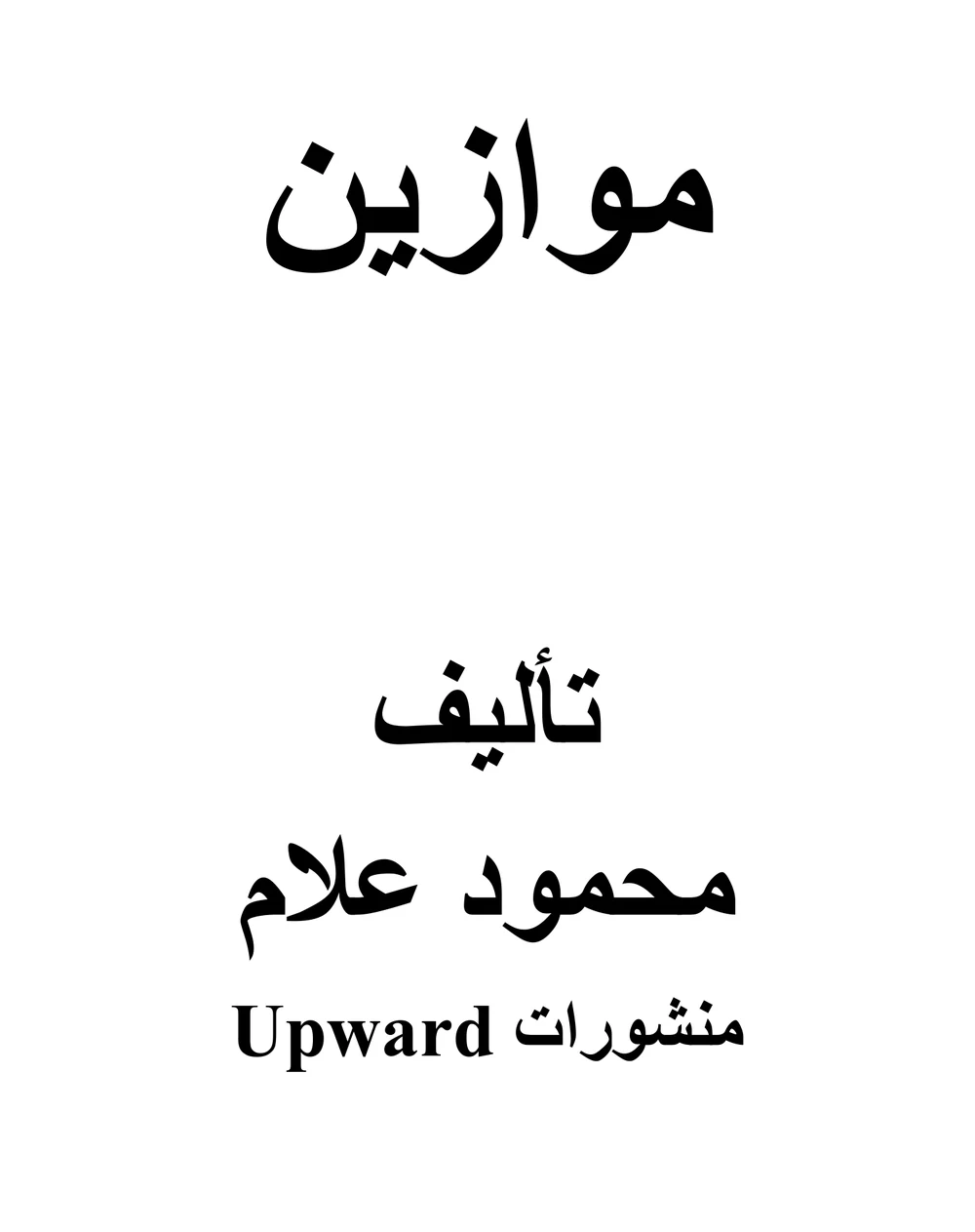
موازين — Mawazin
Seventeen balances by which a decision is weighed — and an argument that a life is not set right by intentions, experience, systems or slogans alone.
The idea
The problem is not that people know too little
The book opens on a diagnosis: a person may know a great deal and still misjudge, because knowing and weighing are different faculties. What is missing is not information but a criterion — a set of balances by which what you already know can be used.
It takes seventeen of them, in nine movements that follow the shape of an action: intention, understanding, weighing, execution, transactions, relationships inside a system, steadiness under turbulence, justice, and review.
Why it exists
It is written against two failures at once. The first is the habit of keeping religious knowledge and practical life in separate rooms. The second is the assumption that modern management tools are sufficient on their own. The book compares each balance with contemporary management thinking — governance, feedback, continuous improvement — not to make one follow the other, but to see where each is wider, narrower or simply wrong.
كما أن هذا الكتاب لا يدعي أن من حمل هذه الموازين لن يخطئ… لكنه يدعي شيئًا آخر، وهو أن وجود الموازين الصحيحة يجعل الخطأ أبكر انكشافًا، وأقل تكرارًا، وأقرب إلى التصحيح.
From the introduction
What is in it
A method, applied seventeen times
Each balance is built the same way: four founding rules, each classified; then the evidence — Qur’an, hadith, and then al-Shatibi, Ibn Taymiyyah, Ibn al-Qayyim, Ibn Rajab; then the rules explained; then the balance assembled as a system; and then two applications, one personal and one institutional.
The final chapter argues that the seventeen are one interlocking instrument, that using any of them alone corrupts it, and that their effect runs outward in three stages: the person, the institution, and then the society both sit in.
Who it is for
Someone who already carries responsibility and already knows a good deal. The applied half of every chapter speaks to people who decide, lead, hold contracts or handle money — and it addresses the individual and the institution in the same breath throughout.
Status
A finished manuscript in Arabic — around fifty thousand words, seventeen chapters in nine sections, plus a conclusion. Written under the Upward imprint. Not published, and nothing here is for sale.