The written work
Transformation is a decision problem before it is a technology problem. This is that argument written down — books of my own, professional works, industry references, and three things still being written.
Life and judgement
Written in Arabic, about what the profession rarely puts in writing
These are not management books with religious decoration, and they are not devotional books with business examples. They ask how a person actually decides — and they take both halves of that seriously enough to argue from sources rather than from sentiment.
- موازينMawazinSeventeen balances by which a decision is weighed. Built from founding rules and classical scholarship, then extended into governance, money and teams.
- فاستقمFastaqimUprightness as a working discipline. Twenty-three chapters, each ending in a pause and one action for the week.
- خلفاءKhulafaA structural reading of Surat Al-Baqarah as one argument about building a person, a community and a life.
- أرقام لا تنامHow a company learns to read itself through its own numbers, taught in situations rather than definitions.
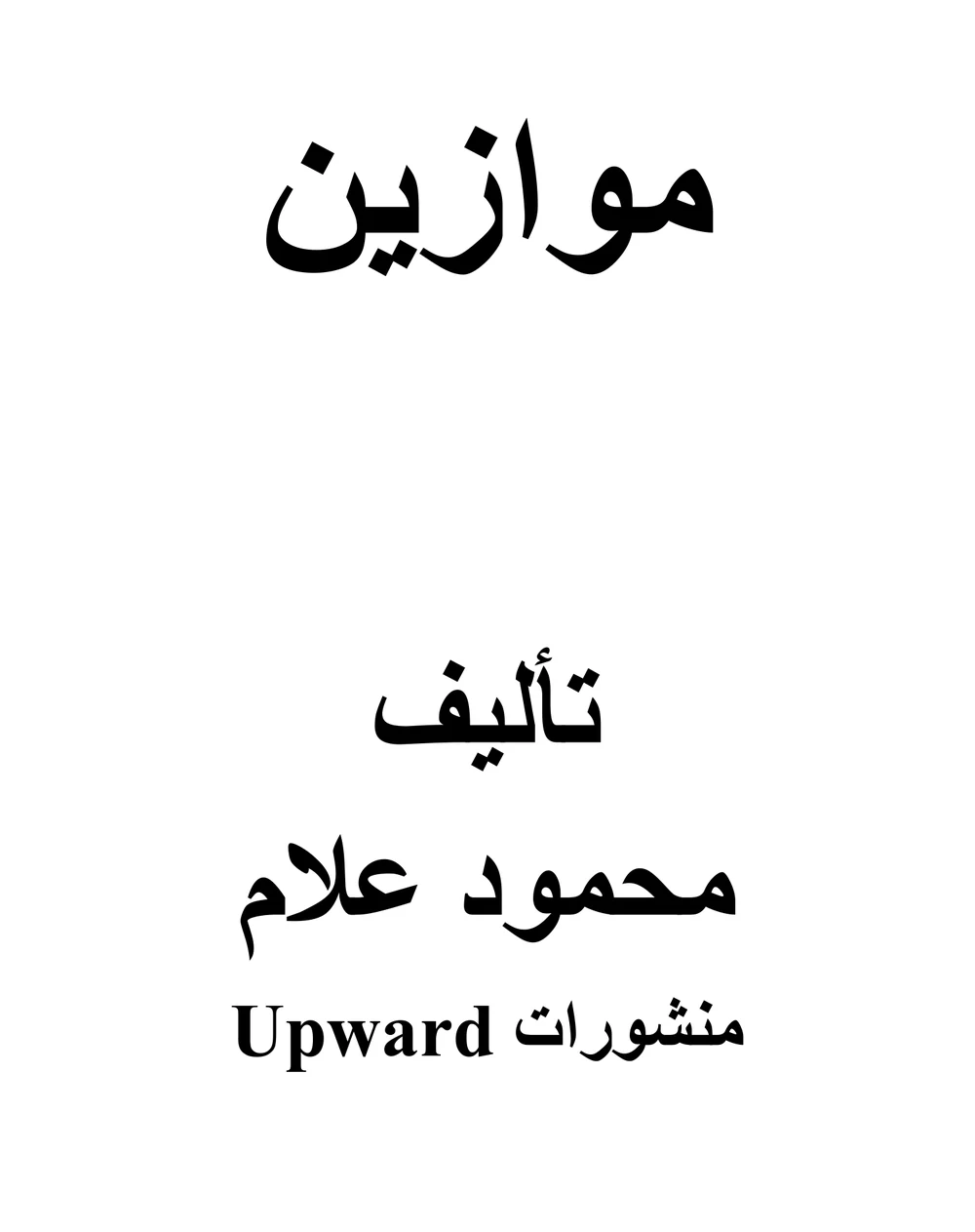
The title page of موازين, as it stands in the manuscript.
This is not a cover. No cover exists, because the work is not published. What exists is the manuscript itself, and this is its first page.
The thread
Why these belong on the same shelf as the ERP books
There is one argument running under all of it, and it is easier to see written down than it was to notice while writing: understand the reality, judge it well, choose the right system, deliver it properly, and then keep it alive. Each book takes one of those and refuses to move on until it is done.
The personal works are the first two. The professional works are the last three. It is the same discipline applied at different scales, which is why an ERP selection guide and a book about weighing a decision do not sit oddly together — one is the other, with a budget attached.
Systems and delivery
Professional works
Written for practitioners, and out of practice rather than out of documentation. Each was developed with expert input and technical review; the contributions are real and are not treated as co-authorship.
- The Upward Way to OdooThe method a delivery practice writes down so that what it learns does not leave with the people who learned it.
- ERP Systems Selection GuideVendor-neutral, because almost nothing else available is. The decision before the product.
- إدارة مشاريع Odooنديرها بإحسانHow to govern an implementation. Not how the software works.
- ماذا بعد أودو؟The Living SystemThe years after go-live, which is where an ERP is actually won or lost.
Industries as operating models
Field references
A different layer again. These translate an industry’s operating reality into an enterprise architecture — closer to a technical index than to a book of ideas, and used as such.
Construction 360
The construction project lifecycle as one connected operating model — bidding, bills of quantities, planning, the technical office, procurement, site execution, billing, variation, cost and controls.
Written for Contractors, project directors, commercial managers, technical offices, planning, procurement and finance.
Facility and Maintenance 360
Facility and maintenance operations across assets, locations, preventive and corrective work, tickets, technicians, spares, field evidence and multi-site reporting.
Written for Facility management companies, maintenance contractors, property operators, hospitals, schools, malls and corporate estates.
Real Estate 360
The real estate lifecycle from reservation through contracting, collections, commission, handover, the unit and property hierarchy, and ownership transfer.
Written for Developers, property companies, sales, finance, collections and brokerage.
Upward 360 Portfolio — Master Edition
The multi-industry architecture the three references above are drawn from: systems, workflows, data, governance and intelligence connected across sectors rather than modelled one sector at a time.
Written for Enterprise architects, transformation leads and multi-company operators.
Not finished
Still being written
Listed rather than hidden. A body of work that shows only completed things is not an honest account of how it is made.
أرقام لا تنام — part two
A deeper layer beneath the first: the cost of capital, inflation and currency, investment decisions, Islamic finance, and the economics surrounding a business decision rather than inside it.
In development. Not described further here until the manuscript is.
قدَّمتُ لحياتي
A personal work, listed because it exists.
Manuscript not yet verified against source. Nothing is claimed about it.
50 قاعدة جديدة
Fifty rules from the Islamic legal sciences — maqasid, fiqhi and usuli maxims — handed to a general reader as everyday decision tools rather than left to specialists. Its argument is that those disciplines were built as instruments for deciding, where modern management theory generalises from accumulated experience that does not always travel between contexts. Twelve of the fifty are written.
Early draft, and a distinct project rather than a companion to موازين — although the two share several founding rules.
Nothing here is published. There is no ISBN, no publisher and nothing to buy, and no page on this site says otherwise. I am the primary author of all of it; where others contributed expert input, technical review or editorial review, that is what they did, and it is not represented as joint authorship.